Most task lists fail in the same way. They start short and useful, then grow until they hold every idea, request, and reminder you have ever had. Opening the list each morning becomes a small source of stress, and the important work hides between “renew the domain” and “read that article”.
The two-list method fixes this with one rule: keep two lists, and only ever work from the short one.
List one: today
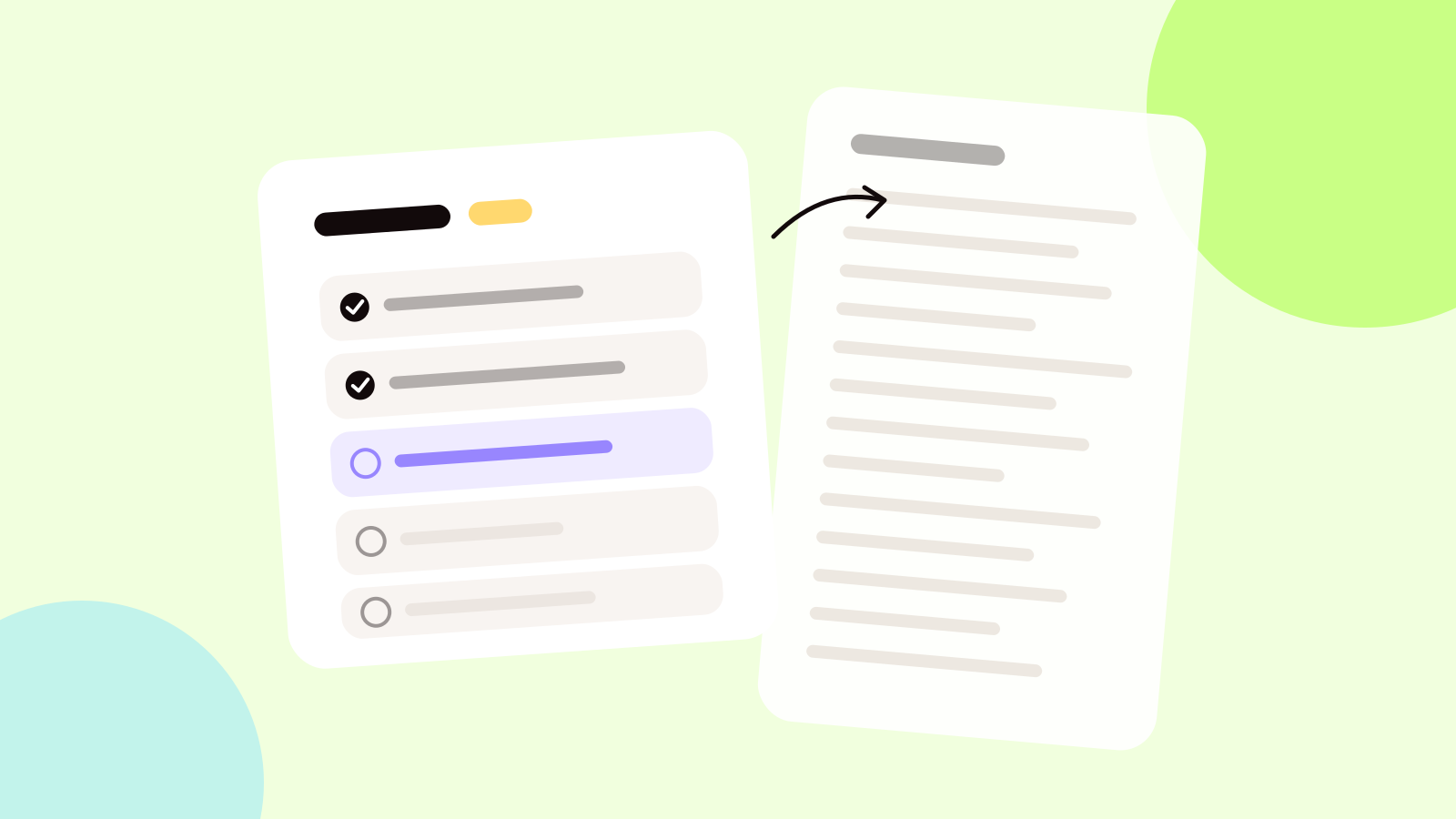
The today list holds what you plan to finish before the end of the day. It has a hard limit of five items. Five is enough for a full day of real work, and few enough that you can see the whole list at a glance.
Write each item as something you can finish, not something you can work on. “Draft the onboarding email” is finishable. “Onboarding” is not.
List two: everything else
The second list is your inbox and backlog combined. New requests, ideas, and reminders go here first, never straight onto today. You do not need to organize it every day. You only need to trust that nothing written there gets lost.
Group it loosely if that helps, for example by project or by “this week” and “later”, but resist the urge to polish it. Its job is to hold things so your head does not have to.
The daily routine
The method takes about ten minutes a day:
- At the end of the day, look at what is left on today’s list. Move unfinished items back to the second list or keep them for tomorrow, on purpose.
- Scan the second list and pick up to five items for tomorrow. Put the hardest one first.
- In the morning, start with the first item before you open your messages.
That is all. No scoring system, no color codes, no weekly reshuffling of forty items.
A short list you finish is more motivating than a long list you admire.
Why five works
Five items forces a choice every evening. When everything cannot fit, you have to decide what matters most tomorrow, and that decision is most of the value. It also gives you a clear finish line. When the five are done, the day is done, and anything else is a bonus.
If you regularly finish only two or three, that is useful information too. Your days have less free time than you think, and the next planning meeting should know it.
Using it with a team tool
The method works on paper, but it pairs well with a shared task tool. Keep your team’s work on the shared board, and use a personal “Today” view or a label to mark your five. Your teammates still see the full picture, and you see only what you chose for the day.
Try it for two weeks. If you still prefer one long list after that, you have lost nothing but a few evenings of choosing.